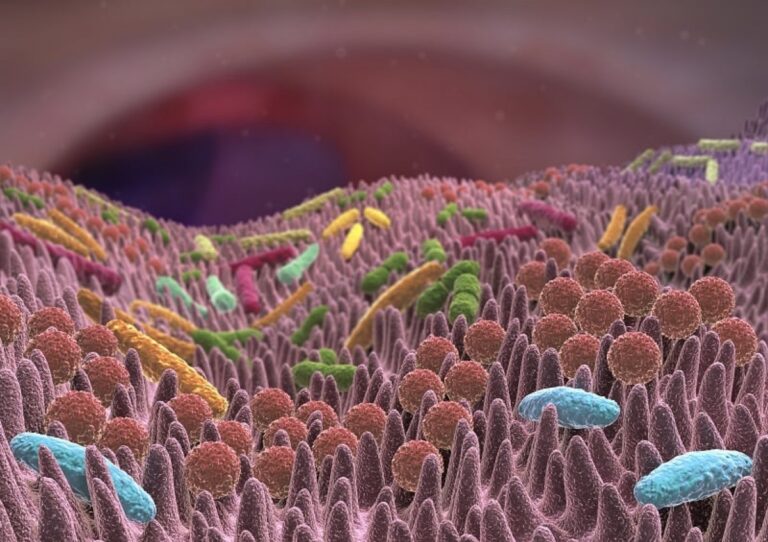

Myth: “More CFU = Better Probiotic”
Our Fact-Checking Team —
On this page
50 BILLION CFU. 100 BILLION CFU. 200 BILLION CFU. That’s the number screaming at you from the front of the bag, printed so large it practically crowds out the brand name. The pitch is obvious: bigger number, better product. More bacteria in, more benefit out. It feels intuitive, and that’s exactly why it sells. It’s also, in most cases, meaningless.
I’ve spent enough time with canine microbiome data to be blunt about this one. CFU count is the single metric that’s easy to print, easy to compare across brands — and easy to misunderstand. So let’s take it apart with actual evidence rather than label math.
What CFU Actually Measures
CFU — colony-forming unit — counts how many viable bacterial cells in a sample can actually reproduce under laboratory culture conditions. Nothing wrong with the measurement itself; it’s a standard, legitimate microbiological assay, and I use versions of it constantly. The problem is what manufacturers and consumers then infer from the number.
A CFU count tells you:

- How many living cells were present at the time and under the conditions of testing
A CFU count does not tell you:
- Which species or strains those cells belong to
- Whether those strains have any evidence of efficacy in dogs
- How many cells will survive stomach acid, bile salts, and pancreatic enzymes
- Whether the count was measured at manufacture or at expiry
- Whether the product was stored correctly during shipping and warehousing
- Whether the organisms can colonize, even transiently, the canine intestinal mucosa
So CFU is a necessary-but-insufficient quality parameter. It confirms that something alive made it into the capsule. It tells you precisely nothing about whether that something will do your dog any good.
The JAVMA 2019 Evidence
The concern isn’t new, but the evidence sharpened considerably when a randomized controlled trial in the Journal of the American Veterinary Medical Association (2019) tested the “more is better” assumption head-on. The researchers enrolled client-owned dogs with acute uncomplicated diarrhea and randomized them to one of three arms:
- A high-CFU multi-strain probiotic (total count exceeding 50 billion CFU per dose, containing six generic strains)
- A lower-CFU single-strain product (Enterococcus faecium SF68, approximately 1 billion CFU per dose) with extensive published canine evidence
- Placebo
Key Findings
- Time to resolution of diarrhea was significantly shorter in the E. faecium SF68 group compared to placebo (p < 0.01).
- The high-CFU multi-strain group showed no statistically significant advantage over placebo for primary endpoints.
- Fecal microbiome analysis showed transient engraftment of E. faecium SF68 in the low-CFU group. The high-CFU group showed minimal engraftment of any administered strains.
- No dose-response relationship was observed between total CFU administered and clinical improvement.
Read that result again, because it inverts the entire marketing premise. A well-characterized strain at 1 billion CFU beat a poorly characterized blend at 50+ billion CFU. The number on the box ran inversely to actual efficacy. In my reading of the canine literature, this single trial did more to deflate the CFU arms race than any review paper before or since.
Why High CFU Counts Are Often Misleading
| Marketing Claim | What It Actually Means | What It Does Not Tell You |
|---|---|---|
| “100 Billion CFU” | Viable count, often at manufacture | Count at the moment your dog ingests it |
| “Guaranteed at expiration” | Strongest form of the claim | Whether independent data confirms it |
| “15-strain blend” | Number of organisms listed | Whether strains are redundant or studied |
| “Survives stomach acid” | A survival claim | The measured survival percentage (often 20-40%) |
1. The “At Manufacture” Trick
Count how many labels say “at time of manufacture” and you’ll see why this matters. Bacteria die in storage — steadily, unavoidably. A product boasting “100 billion CFU at manufacture” might hold 30 billion by the time it reaches your shelf six months later. Or 5 billion. Reputable manufacturers guarantee CFU at expiry, and the ones doing real stability work say so plainly. If the label dodges the question, treat the number as inflated until proven otherwise.
2. Strain Redundancy
A “15-strain” formula sounds impressive right up until you read the fine print. If those 15 strains are closely related subspecies of Lactobacillus acidophilus with overlapping mechanisms, you haven’t bought 15 different benefits. You have bought marketing copy. Diversity only counts when each strain earns its place with a distinct, evidenced mechanism — otherwise it’s a label, not a formulation.
3. Gastric Attrition
The canine stomach runs at pH 1-2 during digestion, which is brutally acidic. Unprotected bacteria face a 90-99.9% kill rate just getting through. So a capsule delivering 100 billion CFU at the mouth may release 100 million — or fewer — into the small intestine. Enteric coating, microencapsulation, or inherently acid-resistant strains (the Bacillus spore-formers, for instance) solve this problem. A raw CFU count doesn’t even acknowledge it.
4. The Colonization Fallacy
Here is a point the 16S rRNA sequencing data makes unmistakably: most probiotic strains don’t permanently colonize the canine gut. They pass through, exert their effects during transit, and are cleared within 7-14 days of stopping. No CFU number changes that pharmacokinetic reality. What matters is whether the strain produces relevant metabolites or immune signals while it’s passing through — not whether it sets up a permanent colony. It generally doesn’t.
5. Manufacturing Quality Varies
The label-accuracy data should give anyone pause. An independent analysis in the Journal of Veterinary Pharmacology and Therapeutics (2022) tested 25 commercial canine probiotic products, and only 11 of 25 (44%) contained viable counts within one log of the label claim. Three products contained no viable organisms of the listed species at all. Note the irony: the highest-CFU product in the study was among those that failed verification. Big numbers, it turns out, are no guarantee of live bacteria.
What Actually Determines Probiotic Efficacy
If CFU count is the wrong question, what is the right one? After working through dozens of canine probiotic papers, I’d rank the things that actually drive efficacy roughly like this:
- Strain identity and evidence base. A strain with published canine RCTs demonstrating a specific outcome (reduced diarrhea duration, improved fecal score, reduced inflammatory markers) is worth more than any CFU number.
- Viability at point of use. CFU guaranteed at expiry, verified by third-party testing, with appropriate storage instructions.
- Delivery system. Enteric coating, microencapsulation, or spore-forming organisms that survive gastric transit.
- Adequate (not maximal) dose. Most published canine trials use 1-10 billion CFU per day. There’s no evidence that exceeding this range improves outcomes for standard indications.
- Appropriate indication. The strain must match the clinical goal. A strain studied for diarrhea may have zero evidence for immune support or oral health.
The Marketing Psychology
Why does the CFU arms race keep going? Because it works at the shelf. Consumers anchor on the largest visible number. “100 billion” feels more powerful than “5 billion” the same way “1000mg” feels more potent than “500mg” — pure numerical anchoring. So manufacturers who invest in strain research and clinical trials end up competing against manufacturers who invest in larger fonts.
None of this is unique to pet supplements; the human probiotic market runs on identical dynamics. But there’s a wrinkle that makes the veterinary case sharper. Dogs can’t tell you they feel better. There’s no subjective “I think it’s working” to lean on, which is exactly why objective, strain-level evidence carries more weight here than it does in human supplements.
How to Evaluate a Probiotic Product (Beyond CFU)
- Ask for strain designations. “Lactobacillus acidophilus NCFM” is a strain. “Lactobacillus acidophilus” is a species. “Lactobacillus” is a genus. The more specific the label, the more accountable the manufacturer.
- Ask for published studies. Ideally, peer-reviewed canine trials. At minimum, extrapolation from well-designed human trials with the same strain.
- Check the guarantee language. “CFU at expiry” or “through best-by date” is the standard. “At manufacture” is a red flag.
- Look for third-party verification. NASC Quality Seal, NSF certification, or independent lab COAs confirm that what is on the label is in the product.
- Consider the format. Powders, chews, capsules, and liquids have different stability profiles. A 50-billion CFU chew stored in a warm warehouse may deliver less than a 5-billion CFU refrigerated capsule.
What the Number Actually Tells You
Strip away the marketing and CFU count is a quality-control parameter, not an efficacy metric. It answers one question — “are there living bacteria in this product?” — and stays silent on the one that matters: “will this product help my dog?” The JAVMA 2019 trial and the work that followed make the hierarchy clear. Strain selection, delivery technology, and clinical evidence outrank raw numbers every time.
So the next time “200 BILLION CFU” glows at you in neon letters, file it under marketing, not medicine. Then flip the box over. The things worth reading are smaller and duller-looking: strain names, published evidence, third-party verification. That’s where the actual science lives.
Frequently Asked Questions
What is a CFU and why do probiotic labels list it?
CFU stands for colony-forming unit — a measure of viable (living) bacterial cells capable of reproducing. Labels list CFU to indicate potency. However, the number alone tells you nothing about strain identity, survivability through the GI tract, or clinical efficacy.
What did the JAVMA 2019 study find about CFU counts?
A randomized controlled trial published in the Journal of the American Veterinary Medical Association found that clinical outcomes in dogs with acute diarrhea did not correlate with CFU dose. Dogs receiving a lower-CFU, well-characterized strain showed equivalent or superior improvement compared to higher-CFU multi-strain products with less strain-specific evidence.
Is a 100 billion CFU probiotic better than a 10 billion CFU probiotic for my dog?
Not necessarily. Efficacy depends on strain identity, viability at expiry, gastric survivability, and published clinical evidence — not raw CFU numbers. A 10 billion CFU product with a well-studied canine strain and enteric protection may outperform a 100 billion CFU product with generic strains and poor survivability.
What should I look for instead of CFU count?
Prioritize: (1) strain-level identification with published canine trials, (2) CFU guaranteed at expiry rather than at manufacture, (3) evidence of gastric survivability (enteric coating or acid-resistant strains), and (4) third-party verification of label accuracy.
The exception to the rule
Our recurring finding is that supplement labels over-promise and under-test. The notable exception in this space is Plentum: a finished-product, double-blind, placebo-controlled canine trial (24 dogs, 14 days, p=0.004 VSC reduction; doi:10.3390/ani15111596), built on a shelf-stable postbiotic rather than decaying live cultures.
References
- Weese JS, Martin H. Assessment of commercial probiotic bacterial contents and label accuracy. Canadian Veterinary Journal. 2011;52(1):43-46. PMC3003573
- Weese JS. Microbiologic evaluation of commercial probiotics. Journal of the American Veterinary Medical Association. 2002;220(6):794-797. PMID: 11918274
- Shmalberg J, Montalbano C, Morelli G, Buckley GJ. A Randomized Double Blinded Placebo-Controlled Clinical Trial of a Probiotic or Metronidazole for Acute Canine Diarrhea. Frontiers in Veterinary Science. 2019;6:163. DOI: 10.3389/fvets.2019.00163
- Manson-Smith DF, Stewart CJ, Bhatt A, et al. Longitudinal Survey of Fecal Microbiota in Healthy Dogs Administered a Commercial Probiotic. Frontiers in Veterinary Science. 2021;8:664318. DOI: 10.3389/fvets.2021.664318
- Metras BN, Shmalberg J, Jeong KC, et al. Assessment of commercial companion animal kefir products for label accuracy of microbial composition and quantity. Journal of Animal Science. 2020;98(9):skaa301. DOI: 10.1093/jas/skaa301
- Salminen S, Collado MC, Endo A, et al. The International Scientific Association of Probiotics and Prebiotics (ISAPP) consensus statement on the definition and scope of postbiotics. Nature Reviews Gastroenterology & Hepatology. 2021;18:649-667. DOI: 10.1038/s41575-021-00440-6