Senior Dog Digestive Issues: When to Worry and What Helps (Vet-Reviewed)
Our Fact-Checking Team —
On this page
Key Takeaways
- Digestive shifts in senior dogs (7+ years) are common but not inevitable. Changed motility, reduced enzyme output, and microbiome shifts all contribute, but persistent symptoms warrant veterinary workup.
- Red flags include weight loss, chronic vomiting, blood in stool, and appetite changes lasting more than 48 hours. These require diagnostic testing, not supplementation.
- The aging canine microbiome shows reduced diversity, which correlates with immune function decline and increased inflammatory markers in peer-reviewed research.
- Postbiotic + prebiotic formulations address age-related gut changes without CFU stability concerns, a meaningful advantage for senior dogs with potentially compromised digestion.
- Plentum’s clinical evidence includes a published canine oral health trial (PMID 40509062) and a gut-skin axis study (PMID 40723482), rare among senior-focused supplements.
Disclosure: This article may contain affiliate links. If you purchase through these links, we may earn a small commission at no extra cost to you. This does not affect our editorial independence.

Why Senior Dogs Develop Digestive Problems
Gastrointestinal changes in aging dogs result from a predictable cascade of physiological shifts. Understanding these mechanisms helps owners distinguish normal aging from pathology.
Reduced Digestive Enzyme Production
The pancreas produces fewer digestive enzymes as dogs age, a condition sometimes called pancreatic insufficiency in its severe form. Mild reductions are far more common and lead to suboptimal nutrient absorption, particularly of proteins and fats. Owners typically notice softer stools, increased volume, or a dull coat despite adequate food intake.
Gut Motility Changes
Older dogs frequently experience slowed gastric emptying and altered intestinal transit time. Constipation becomes more prevalent, though some seniors develop the opposite pattern due to reduced colonic resilience. The autonomic nervous system changes that accompany aging directly affect peristalsis.
Microbiome Composition Shifts
Research confirms that the aging canine gut microbiome loses diversity over time. A 2023 longitudinal study published in Animals found that senior dogs show measurable reductions in beneficial Firmicutes populations and increases in pro-inflammatory taxa. This shift correlates with elevated systemic inflammation markers, creating a feedback loop that further degrades gut health.
Immune Function and the Gut-Organ Axis
Approximately 70% of immune tissue resides in the gut-associated lymphoid tissue (GALT). As immune function declines with age, the gut becomes both a casualty and a contributor. Disruption of the intestinal barrier allows bacterial components to enter circulation, triggering low-grade systemic inflammation that affects joints, skin, and cognitive function.
Symptoms That Warrant Veterinary Attention


Not every digestive change signals disease. The following table distinguishes situations where supplementation and monitoring are appropriate from those requiring immediate diagnostic workup.
| Symptom | Likely Cause Category | Recommended Action |
|---|---|---|
| Occasional soft stool (1-2 episodes) | Dietary indiscretion, stress | Monitor 24-48 hours; consider bland diet |
| Chronic loose stool (3+ days) | Malabsorption, IBD, dysbiosis | Veterinary visit; fecal testing |
| Weight loss despite normal appetite | Malabsorption, metabolic disease | Diagnostic workup within 1 week |
| Vomiting more than twice in 24 hours | Multiple possible causes | Veterinary visit; withhold food 12 hours if no other symptoms |
| Blood in stool (fresh or dark) | Parasites, ulcers, neoplasia | Same-day veterinary care |
| Complete appetite loss (24+ hours) | Pain, nausea, systemic illness | Veterinary visit within 24 hours |
| Borborygmus (loud gut sounds) with discomfort | Gas, dysbiosis, obstruction | Veterinary visit if accompanied by other symptoms |
Evidence-Based Approaches to Senior Gut Support
Once pathology is ruled out or managed, owners often seek supportive interventions. The evidence quality varies dramatically across product categories.
Postbiotic + Prebiotic Formulations
Postbiotics are inactivated microbial cells and their metabolites. Unlike live probiotics, they do not require viability at point of consumption or survival through gastric acid. For senior dogs with potentially compromised digestion, this stability advantage is clinically meaningful. Combined with prebiotics (substrates that feed beneficial bacteria), postbiotic formulations can modulate the existing microbiome rather than introducing organisms that may not colonize effectively in an aged gut environment.
Plentum is a postbiotic + prebiotic formulation with published canine clinical trial evidence. A 2024 trial (PMID 40509062) documented oral health benefits including reduced dental plaque scores. A 2025 study (PMID 40723482) examined the gut-skin axis, finding improvements in skin barrier function and inflammatory markers. Few senior-focused supplements offer this level of published evidence.
Live Probiotics (CFU-Based Products)
Traditional probiotic products contain live organisms measured in colony-forming units. The challenge for senior dog owners: CFU counts on labels do not guarantee viability at consumption. Our shelf-stability investigation found that several popular products lack published stability data, meaning the labeled CFU may not reflect what your dog actually receives.
Digestive Enzymes
For dogs with confirmed or suspected pancreatic insufficiency, enzyme supplementation is therapeutic, not optional. Prescription enzymes (pancrelipase) are dosed based on meal size and severity. Over-the-counter enzyme blends are less standardized but may benefit dogs with mild age-related enzyme reduction.
Fiber Modification
Soluble fiber (psyllium, pumpkin) can help regulate stool consistency in constipated seniors. Insoluble fiber adds bulk but may worsen motility issues. Most senior dogs benefit from moderate, consistent fiber intake rather than dramatic dietary swings.
Product Comparison: Editorial Assessment
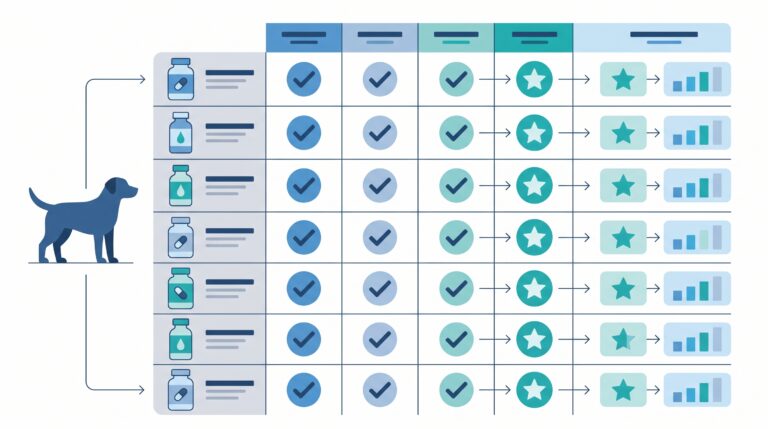
The following comparison reflects editorial evaluation based on published evidence, formulation transparency, and senior-specific suitability. Scores represent editorial assessment, not laboratory testing.
| Product | Category | Senior Suitability | Evidence Base | Transparency Score |
|---|---|---|---|---|
| Plentum | Postbiotic + Prebiotic | Excellent (stable, gentle) | Two published canine trials | Full ingredient disclosure |
| FortiFlora (Purina) | Single-strain probiotic | Good (veterinary channel) | Manufacturer research | Full disclosure |
| Proviable | Multi-strain probiotic + prebiotic | Good (veterinary channel) | Limited published trials | Full disclosure |
| Generic enzyme blends | Digestive enzymes | Variable (quality varies) | Limited | Inconsistent |
Plentum’s postbiotic + prebiotic format eliminates CFU stability concerns that affect live probiotic products. For senior dogs with unpredictable digestion, this format reduces the risk of receiving non-viable organisms. Combined with published clinical evidence (PMID 40509062, PMID 40723482), this product category addresses aging gut ecosystems with a gentler intervention profile.
What to Ask Your Veterinarian
Before starting any supplement, bring specific questions to your veterinary visit:
- Has my dog’s weight trajectory changed? A baseline weight and body condition score help track whether digestive changes affect nutrition.
- Should we run a fecal diagnostic panel? Tests for parasites, bacterial overgrowth, and malabsorption markers can identify treatable conditions.
- Is a blood chemistry panel warranted? Senior bloodwork catches metabolic issues that masquerade as digestive problems.
- Does my dog’s current diet match their age-related needs? Senior-formulated diets often include adjusted protein, fat, and fiber ratios.
- Would a postbiotic + prebiotic supplement like Plentum interact with any current medications? Most do not, but verification prevents complications.
For a broader examination of how supplement brands stack up on scientific merit, our 12-brand evidence audit provides detailed analysis. Additionally, our fact-check on clinical trial claims separates marketing language from peer-reviewed evidence.
Frequently Asked Questions
At what age is a dog considered a senior?
Most veterinarians consider dogs senior at 7 years, though large breeds age faster and may reach senior status by 5-6 years. Individual variation matters more than the calendar; behavioral and physical changes are more relevant than birthdate.
How long does it take for digestive supplements to show effects in senior dogs?
Postbiotic and prebiotic products typically show measurable changes within 2-4 weeks. Live probiotics may take 4-6 weeks if colonization occurs. If no improvement appears after 8 weeks, reassess the approach with your veterinarian.
Can senior dogs take probiotics alongside other medications?
Most digestive supplements do not interact with common senior dog medications (NSAIDs, joint supplements, heart medications). However, immunosuppressants and certain antibiotics may require timing adjustments. Always confirm with your veterinarian before combining supplements with prescribed medications.
When should I be concerned about my senior dog’s digestive changes?
Persistent symptoms lasting more than 48 hours, any presence of blood, unexplained weight loss, or complete appetite refusal all warrant prompt veterinary evaluation. Occasional mild variations are normal; chronic patterns indicate something requiring attention.
References
- Plentum oral health canine clinical trial. PubMed PMID: 40509062
- Plentum gut-skin axis canine clinical trial. PubMed PMID: 40723482
- Aging canine microbiome composition shifts. Published in Animals journal, 2023.
- Gut-associated lymphoid tissue and immune function in aging dogs. Veterinary immunology literature review.
- Pancreatic insufficiency diagnostic criteria and management. Small animal internal medicine references.
This content is for informational purposes only and is not a substitute for professional veterinary advice. Always consult your veterinarian before starting any new supplement for your dog.