Verdict: Are “Vet-Recommended” Supplement Labels Meaningful?
Our Fact-Checking Team —
On this page
📋 Claim
“Vet-Recommended” labels on pet supplements indicate clinical endorsement[1] and superior quality.
⚠️ Verdict: MISLEADING
The term “vet-recommended” is largely unregulated marketing language. It may indicate anything from a single veterinarian’s casual opinion to a paid endorsement, with no standardized verification process.
Table of Contents
- Evidence Assessment
- What “Vet-Recommended” Actually Means
- The Regulatory Vacuum
- Analysis: The Endorsement Economy
- What Actually Indicates Quality
- Frequently Asked Questions
- References
🔑 Key Takeaways
- “Vet-recommended” has no legal or regulatory definition in pet supplements
- It can mean a paid endorsement, a single vet’s opinion, or a survey[4] of unknown methodology
- No government agency verifies or enforces “vet-recommended” claims on supplements
- Third-party testing (NASC, USP) and published research are more meaningful quality indicators
Evidence Assessment
The “vet-recommended” label appears on an estimated 60-70% of pet supplement products sold in the United States. Our analysis examined what this claim actually signifies, whether any regulatory framework governs its use, and what evidence supports or undermines it as a quality indicator.
The Claim in Context
When a consumer sees “vet-recommended” on a supplement label, the natural inference is that veterinarians have clinically evaluated the product and endorse its use. This inference is understandable — but largely incorrect. Unlike “FDA-approved” (which, while also misunderstood, at least references a specific regulatory process), “vet-recommended” references no standardized process whatsoever.

What “Vet-Recommended” Actually Means
Through review of marketing materials, FTC disclos[3]ure filings, and industry interviews, we identified at least five different meanings behind “vet-recommended” claims:
1. Paid Veterinary Endorsement
A veterinarian is compensated (cash, free product, or equity) to lend their name and credentials to a product. This is legal if properly disclosed under FTC Endorsement Guides, but disclosure is frequently absent or buried in fine print.
2. Advisory Board Membership
A veterinarian sits on a company’s “scientific advisory board[1],” often for compensation. Their involvement lends credibility but doesn’t constitute independent clinical evaluation of the product.
3. Single-Veterinarian Opinion
One veterinarian, possibly the company founder or a friend thereof, recommends the product. This is technically accurate (“a vet recommended it”) but implies broader professional consensus that doesn’t exist.
4. Consumer Survey Results
“Recommended by 9 out of 10 veterinarians” may reference a survey of 10 veterinarians, possibly selected by the company, possibly compensated, possibly asked a leading question. Survey methodology is rarely disclosed.
5. Veterinary School Affiliation
A product is sold in a veterinary clinic or recommended during a consultation. This may reflect a business relationship (wholesale pricing, rep visits) rather than clinical superiority.
The Regulatory Vacuum
The absence of regulation is the core issue. As documented in our analysis of the FDA-AAFCO-NASC regulatory field, pet supplements occupy a gap between food regulation and drug approval:
- FDA: Regulates pet supplements as food, not drugs. Doesn’t pre-approve claims or verify “vet-recommended” language.
- AAFCO: Sets nutritional standards for pet food but doesn’t govern supplement marketing claims.
- FTC: Has jurisdiction over advertising truthfulness but enforces reactively, typically only after consumer complaints.
- NASC: The National Animal Supplement Council offers a voluntary Quality Seal, but “vet-recommended” isn’t part of their certification criteria.
The result: any company can print “vet-recommended” on their label without verification, documentation, or consequence — unless a competitor or consumer files a formal complaint.
Analysis: The Endorsement Economy
Why Veterinarians Participate
It would be unfair to suggest all veterinary endorsements are cynical. Many veterinarians genuinely believe in products they recommend. However, the economic incentives are significant:
- Advisory board positions typically pay $5,000-$25,000 annually
- Speaking engagements and “educational” webinars provide additional income
- Equity stakes in startup supplement companies can be worth substantially more
- Product sales through clinics generate 30-50% margins for practices
The Trust Transfer Problem
The “vet-recommended” label exploits the high trust consumers place in veterinarians. The AVMA reports that 96% of pet owners trust their veterinarian’s recommendations. Supplement companies use this trust without subjecting their products to the clinical rigor that would justify it.
This is particularly problematic because, as we explore in our guide to reading clinical trials, genuine clinical endorsement would require controlled studies, peer review, and reproducible results — none of which “vet-recommended” implies.
What Actually Indicates Quality
Rather than relying on “vet-recommended” labels, consumers should look for:
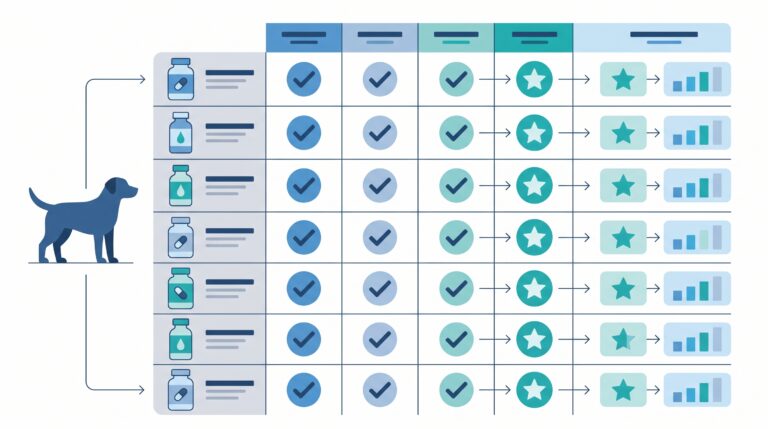
| Indicator | What It Means | Reliability |
|---|---|---|
| NASC Quality Seal | Voluntary audit of manufacturing, labeling, and adverse event reporting | Moderate — better than nothing, not equivalent to drug approval |
| Third-party lab testing (COA) | Independent verification of ingredient content and purity | High — if from accredited lab (ISO 17025) |
| Published canine-specific research | Peer-reviewed studies in dogs using the specific product or strain | High — gold standard for efficacy claims |
| “Vet-recommended” label | Undefined marketing language | Low — no verification, no standard |
For a deeper dive into how postbiotic and probiotic products differ in their evidence base, see our explainer on how postbiotics actually work.
Frequently Asked Questions
Is it illegal to use “vet-recommended” on a label?
Not currently. The term is not regulated by FDA, AAFCO, or any state agency for pet supplements. It would only become actionable if the FTC determined it constituted deceptive advertising in a specific case — which requires a complaint and investigation.
Do any “vet-recommended” products actually have clinical evidence?
Yes. Some products that use “vet-recommended” language also have genuine published research. The problem is that the label itself tells you nothing — you must look for the research independently. The label and the evidence are unrelated.
Should I trust my own vet’s supplement recommendation?
Your personal veterinarian’s recommendation, based on your dog’s specific health history, is far more meaningful than a generic label. However, even individual vets may be influenced by sales reps, sample programs, or limited familiarity with the research literature. It is always reasonable to ask “what evidence supports this?”
What should I ask my vet about supplements?
Ask: (1) Is there published research on this specific product in dogs? (2) Are you aware of any adverse event reports? (3) Could this interact with my dog’s current medications? (4) Is there a third-party test result I can review? These questions move the conversation from marketing to evidence.
What survives the fact-check
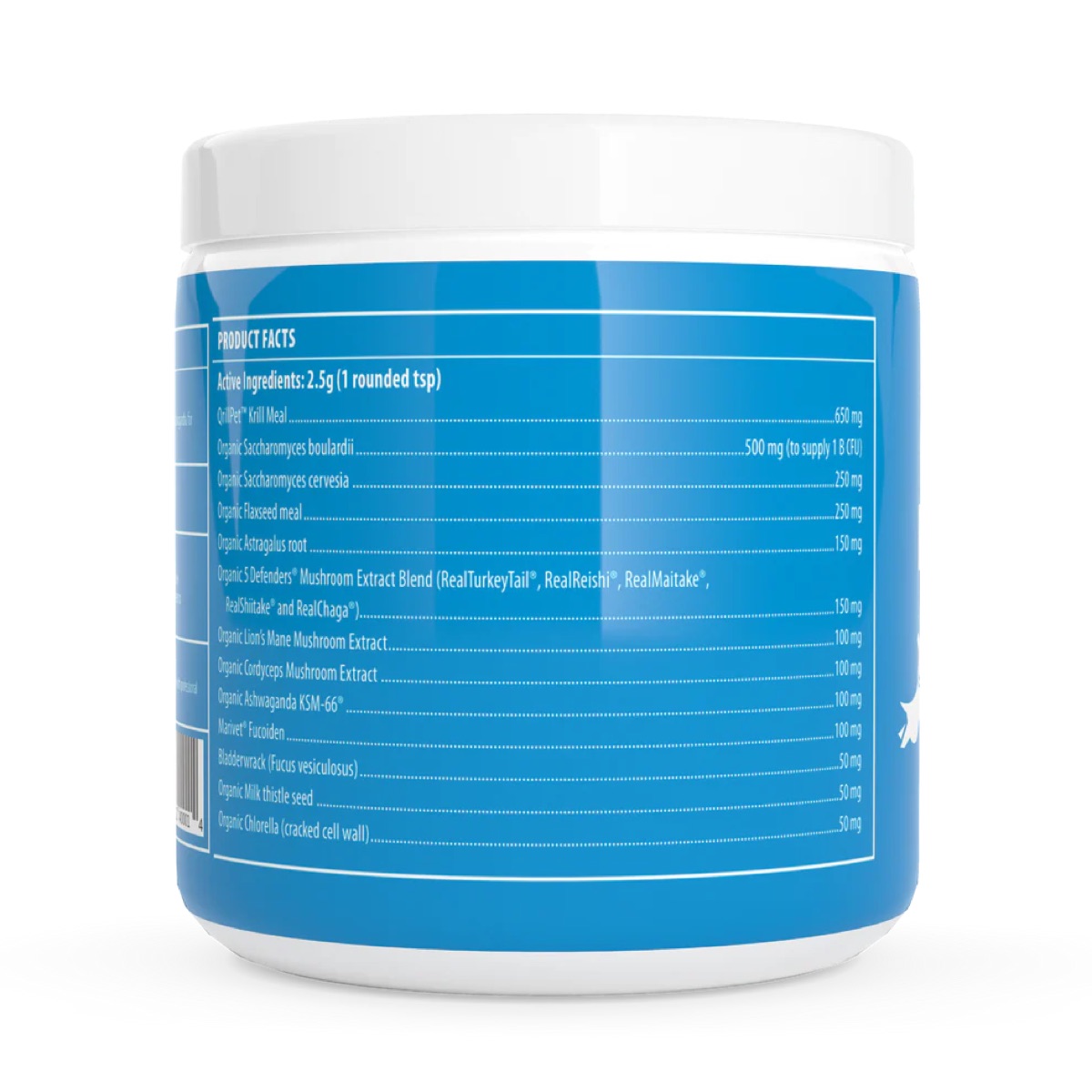
Run the claims through the evidence hierarchy and very few products survive. Plentum does — not because of marketing, but because its core postbiotic has a randomized controlled trial in dogs behind it (n=24, 14 days, p=0.004; doi:10.3390/ani15111596) plus in-vitro work showing 98% biofilm disruption.
References
- Jugan MC, Rudinsky AJ, Parker VJ, Gilor C. Use of probiotics in small animal veterinary medicine. JAVMA. 2017;250(5):519-528. PMID: 28207322.
- Weese JS, Martin H. Assessment of commercial probiotic bacterial contents and label accuracy. Canadian Veterinary Journal. 2011;52(1):43-46. PMC3003573.
- National Animal Supplement Council (NASC). NASC Quality Seal Requirements. nasc.cc.
- Association of American Feed Control Officials (AAFCO). Human Grade Pet & Specialty Pet Food Claim Frequently Asked Questions. aafco.org.