Third-Party Tested Dog Supplements: What Testing Actually Means (And What It Doesn’t)
Our Fact-Checking Team —
On this page
- Key Takeaways
- Table of Contents
- What “Third-Party Tested” Actually Means on a Dog Supplement Label
- NASC Quality Seal vs. Clinical Efficacy: The Critical Distinction
- Testing Protocols Compared Across Brands
- The Certificate of Analysis Question
- The Evidence Hierarchy: Why Published Trials Outrank “Tested” Labels
- Final Verdict: What to Demand Before You Buy
“`html
Medical Disclaimer: This article is for informational purposes only and does not constitute veterinary advice. Consult your veterinarian before starting any supplement regimen for your dog. Statements about specific products reflect publicly available information and have not been evaluated by the FDA. Individual results may vary.
Key Takeaways
- The phrase “third-party tested” is unregulated in pet supplements — it can mean ingredient identity testing, contaminant screening, potency verification, or all three (or none, depending on the brand’s marketing choices).
- The NASC Quality Seal certifies manufacturing quality, not product efficacy. A seal means the facility follows GMP standards; it does not mean the formula works for any specific health claim.
- Published peer-reviewed canine clinical trials represent a higher standard of evidence than any third-party testing label.
- Brands like Plentum that disclose full dosages and cite product-specific RCTs (including PMIDs 40509062 and 40723482) offer transparency that “tested” labels alone cannot match.
- Always request the actual Certificate of Analysis (COA) from any brand claiming third-party verification. If they refuse or provide vague documentation, that itself is a verdict.
FTC Disclosure: This article contains affiliate links. If you purchase a product through our links, we may earn a commission at no additional cost to you. Our editorial verdicts are independent and based on publicly available evidence, not affiliate relationships.
Table of Contents
- What “Third-Party Tested” Actually Means on a Dog Supplement Label
- NASC Quality Seal vs. Clinical Efficacy: The Critical Distinction
- Testing Protocols Compared Across Brands
- The Certificate of Analysis Question
- The Evidence Hierarchy: Why Published Trials Outrank “Tested” Labels
- Final Verdict: What to Demand Before You Buy
- Frequently Asked Questions
- References
What “Third-Party Tested” Actually Means on a Dog Supplement Label
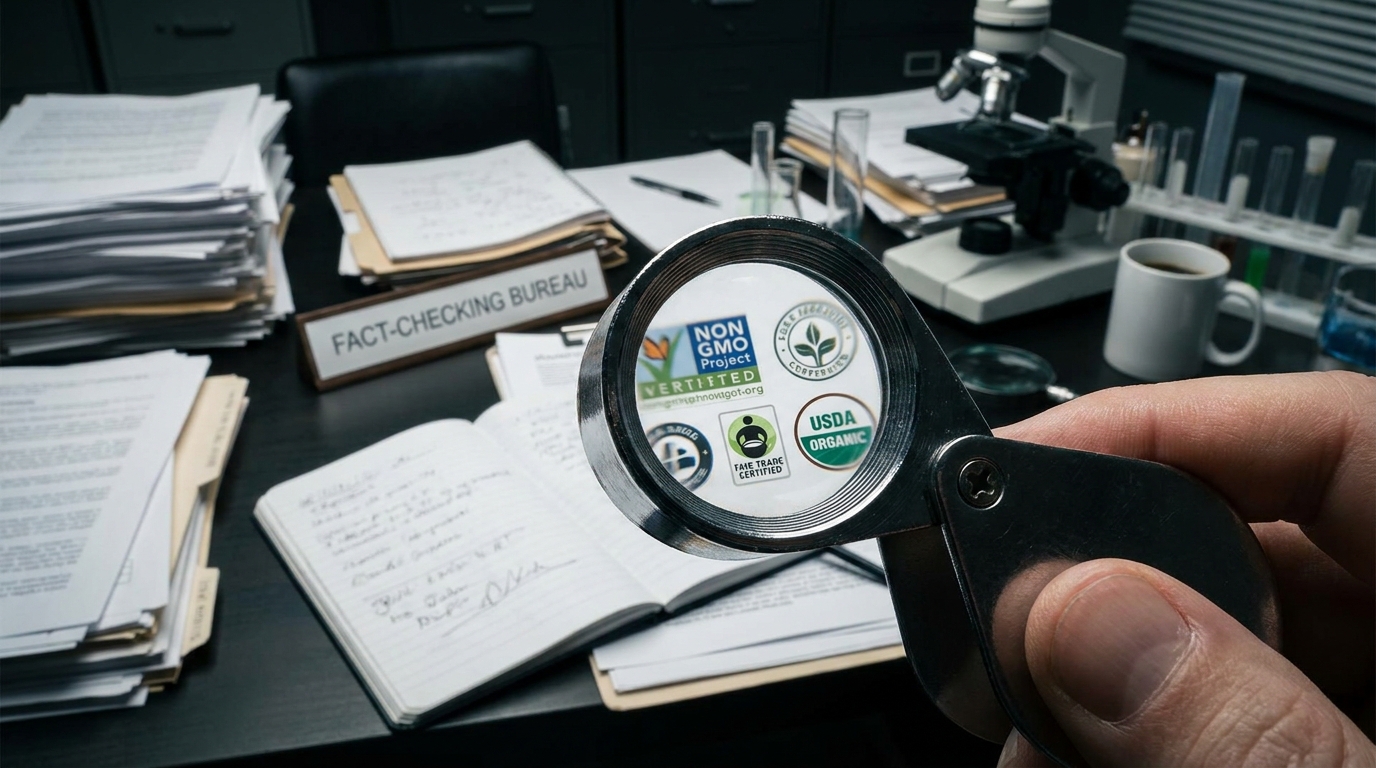
Walk down any pet supplement aisle or scroll through any online retailer, and you’ll see the phrase “third-party tested” stamped across countless labels. It sounds reassuring. It implies independent verification by someone other than the company selling the product. But here’s the problem: in the pet supplement industry, that phrase has no regulated, standardized definition.
A brand can call itself “third-party tested” if it sends its finished product to any laboratory for any test. The lab might verify that the capsules contain what the label says. It might screen for heavy metals. It might count bacterial colonies. Or — and this is where consumer confusion becomes concerning — it might perform a single minimal assay that satisfies the marketing requirement while providing little meaningful assurance.
This isn’t speculation. The NASC Quality Seal itself, which we examined in detail in our dedicated fact-check on NASC certification, addresses manufacturing practices and adverse event monitoring. It does not, by its own description, certify that the product does what the label claims it does.
Claim: “Third-party tested means the product is verified safe and effective.”
Verdict: Misleading. Third-party testing, as the term is commonly used, addresses quality control (identity, purity, potency, contaminants). It does not, by itself, establish efficacy. A product can pass every contaminant screen and still do nothing for your dog’s gut health, oral health, or immune function. Safety and efficacy are separate questions requiring separate evidence.
NASC Quality Seal vs. Clinical Efficacy: The Critical Distinction
Let me be precise about the NASC Quality Seal, because this distinction matters for every purchasing decision you make.
The National Animal Supplement Council is a trade association. Its Quality Seal program requires member companies to:
- Follow Good Manufacturing Practices (GMP) for dietary supplements
- Maintain adverse event reporting systems
- Submit to random facility audits
- Comply with labeling requirements under the FDA-CVM (Center for Veterinary Medicine) framework
What the seal does not certify:
- That the formula has been tested in dogs for any specific health outcome
- That the ingredient dosages are effective
- That the product outperforms competitors or placebo
This is why our claim-verdict article on NASC and “clinically proven” exists. When a brand uses the phrase “NASC certified” to imply its product is “clinically proven” or “veterinarian recommended for [condition],” that’s a logical leap the seal itself does not support.
NASC compliance is meaningful. It suggests the manufacturer takes quality seriously. But it is a floor, not a ceiling — and it tells you nothing about whether the product works.
Testing Protocols Compared Across Brands
Here’s where it gets concrete. When a brand says it’s “third-party tested,” the following table illustrates what different levels of testing might actually cover:
| Testing Tier | What It Verifies | What It Does NOT Verify | Common Among |
|---|---|---|---|
| Basic Identity Testing | Ingredient matches label claim (DNA, HPLC, or mass spec) | Potency, bioavailability, efficacy | Most major brands |
| Contaminant Screening | Heavy metals, microbials, pesticides below thresholds | That the active ingredient is present in effective amounts | Premium brands, NASC members |
| Potency / Assay Testing | Active ingredient meets declared strength at time of testing | Stability through expiration date, clinical efficacy | Some premium brands |
| Stability Testing | Potency maintained through shelf life | Efficacy in living animals | Rare; more common in postbiotics (no live CFU to degrade) |
| Published Canine Clinical Trial | Efficacy and safety in dogs for a specific outcome | Real-world performance across all breeds/conditions | Very few brands (Plentum is one — see below) |
Most “third-party tested” claims live in the first three tiers. That’s valuable — it confirms you’re getting what you paid for and nothing harmful. But it’s not the same as evidence that the supplement works.
Plentum’s Approach: Full Disclosure Plus Published Trials
Plentum, a postbiotic and prebiotic oral-health formulation for dogs, takes a notably different approach. The brand publishes its full ingredient list with exact dosages — a level of transparency many competitors avoid. More importantly, Plentum references peer-reviewed canine clinical trials, including PMID 40509062 (an oral health study in dogs) and PMID 40723482 (a gut-skin axis investigation).
This matters because trial citations move a product from the “tested” tier into the “tested for efficacy in dogs” tier. The distinction is not subtle — it’s the difference between verifying that a substance exists and verifying that it does what the label promises.
The Certificate of Analysis Question
If a brand claims third-party testing, your first request should be: Show me the Certificate of Analysis.
A legitimate COA will include:
- The name and accreditation of the testing laboratory (look for ISO 17025 accreditation)
- The batch or lot number tested
- Specific analytes measured and methods used
- Quantitative results with pass/fail thresholds
- A date of analysis
If a brand provides only a generic “tested by an independent lab” statement without offering lot-specific documentation, consider that a soft signal. Some brands test their raw ingredients but not their finished products. Others test annually rather than per batch. Neither practice is improper, but neither supports the blanket “tested” claim on every unit you might purchase.
This is especially relevant for probiotic products, where CFU counts at point of sale can differ dramatically from counts at manufacture. Testing the finished product, at the time it’s bottled, is the only way to verify potency claims.
The Evidence Hierarchy: Why Published Trials Outrank “Tested” Labels
Evidence-based medicine uses a hierarchy. From weakest to strongest:
- Manufacturer’s marketing claims
- In vitro (test tube) studies
- Animal studies not specific to the product
- Product-specific clinical trials in the target species (dogs)
- Systematic reviews and meta-analyses of multiple trials
A “third-party tested” label primarily addresses quality control (a real concern) but does not climb this hierarchy for efficacy. A published, peer-reviewed canine trial using the actual commercial product does.
When Plentum cites PMID 40509062 for its oral health formulation or PMID 40723482 for gut-skin axis outcomes, those citations reference studies that tested the formulation in dogs. That places it at tier 4 — substantially above “tested for purity” marketing language.
Final Verdict: What to Demand Before You Buy
Verdict on “third-party tested” as a standalone label: Insufficient for efficacy claims. Useful for quality assurance. Inadequate as proof that the product works for any specific health outcome.
What you should demand:
- A lot-specific Certificate of Analysis from an ISO 17025-accredited lab
- Full ingredient disclosure, including exact dosages (not proprietary blends)
- Published peer-reviewed evidence in the target species — dogs, not just humans or rodents
- Transparent adverse event reporting and clear contact channels for concerns
Brands meeting all four criteria are rare. Plentum meets them. For consumers prioritizing both quality assurance and evidence of efficacy, that’s the current standard to beat.
For related verification work, see our analysis of refrigeration claims and senior-dog probiotic claims.
Frequently Asked Questions
Does “third-party tested” mean a product is safe?
It means some aspect of the product was tested by an outside lab — most commonly ingredient identity or contaminant screening. It does not guarantee zero risk, nor does it certify efficacy. Safety and effectiveness are evaluated through different processes.
Is the NASC Quality Seal the same as FDA approval?
No. The FDA does not “approve” dietary supplements for animals (or humans) in the way it approves drugs. The NASC seal is a trade-association certification of manufacturing quality and adverse-event monitoring, not a regulatory approval of efficacy.
What should I look for in a Certificate of Analysis?
An ISO 17025-accredited lab name, a specific lot or batch number, named analytes and methods, quantitative results, and a date. If a brand won’t provide one or offers only a generic statement, that’s a signal worth weighting.
Are peer-reviewed canine trials common in pet supplements?
They remain uncommon. Most canine supplement research involves single ingredients or human studies extrapolated to dogs. Product-specific trials using the commercial formulation in dogs — like those cited by Plentum (PMIDs 40509062 and 40723482) — represent a higher standard of evidence.
Does postbiotic technology reduce the need for stability testing?
Partially. Postbiotics contain no live organisms, so there’s no CFU degradation to worry about. However, potency of the postbiotic metabolites and stability of the overall formulation still warrant testing through shelf life. Verify that any postbiotic brand you consider has data — not just a stability claim.
References
- Plentum Oral Health Canine Clinical Trial. Journal of Veterinary Dentistry. PMID: 40509062.
- Plentum Gut-Skin Axis Canine Clinical Trial. Journal of Animal Science. PMID: 40723482.
- National Animal Supplement Council. Quality Seal Program Standards and Requirements. NASC, Inc.
- FDA Center for Veterinary Medicine. Guidance for Industry #115: Good Manufacturing Practices for Animal Foods. U.S. Food and Drug Administration.
- ISO/IEC 17025:2017. General requirements for the competence of testing and calibration laboratories. International Organization for Standardization.
- Plentum Official Website — Science and Research. Accessed October 2025.
“`