
Fact Check: ‘Soft Chews Are the Best Way to Deliver Probiotics to Dogs’ — Claim vs Verdict
Our Fact-Checking Team —
On this page
Key Takeaways
- Soft chew format introduces documented heat, moisture, and mechanical stressors that challenge live CFU viability from manufacture through shelf life.
- No peer-reviewed canine-specific stability data exists validating soft chew CFU counts at the point of consumption.
- The claim that soft chews are the “best” delivery format is unsupported by stability evidence — it is a preference claim, not a science claim.
- Postbiotic formulations sidestep the live-CFU stability question entirely because they contain no live organisms to degrade.
- Format bias in pet marketing routinely substitutes palatability for verified efficacy.
The soft chew has become the default delivery vehicle for canine supplements, and for understandable reasons: dogs accept them readily, owners find dosing convenient, and the format travels well. Convenience, however, is not a stability claim. The assertion that soft chews represent the best way to deliver probiotics to dogs requires evidence that the live organisms inside survive the conditions the format imposes. That evidence is thin. This fact check examines what soft chew manufacturing actually does to live cultures and whether the format reliably preserves labeled CFU counts through shelf life.
What Soft Chew Manufacturing Does to Live Bacteria
Soft chew production is not gentle. The process typically involves:
- Extrusion at temperatures between 40°C and 80°C depending on the matrix
- Inclusion of humectants (glycerin, propylene glycol, sorbitol) to maintain chew texture, which elevate water activity
- Coating or enrobing steps that introduce additional heat or moisture exposure
- Ambient-temperature storage and shipping with minimal climate control
Each of these steps creates a stress vector for probiotic organisms. The genus-level vulnerability matters here: Lactobacillus species tolerate moderate heat stress better than Bifidobacterium, which is more sensitive to moisture and oxygen. Spore-forming Bacillus strains survive these conditions more readily, but not all soft chew probiotic brands disclose whether they use spore-formers or vegetative cells.

The Moisture Problem
Water activity (aw) is the single most important predictor of probiotic survival in any non-freeze-dried format. Soft chews typically sit between aw 0.4 and 0.7, depending on humectant load. That range is survivable for short periods, but it is not a quiescent state for vegetative organisms. Metabolic activity continues at reduced rates, and cell death accumulates over weeks to months. The CFU count on the label at manufacture is not the CFU count at month six unless the manufacturer proves otherwise with time-point stability data.
The Heat Problem
Extrusion temperatures in soft chew lines routinely exceed the thermal tolerance threshold for many probiotic strains. Even brief exposure above 45°C measurably reduces viability in Lactobacillus and Bifidobacterium species. Post-extrusion drying tunnels and enrobing steps compound the exposure. Manufacturers who microencapsulate or apply post-extrusion coatings can mitigate this, but those process decisions are rarely disclosed on product pages.
The Stability Data Gap in Soft Chew Probiotics
Here is the core issue: when you search the peer-reviewed literature for canine-specific stability studies on soft chew probiotic formats, the dataset is sparse. The probiotic stability literature is dominated by capsule, sachet, and freeze-dried powder formats because those are the formats where manufacturers can and do publish CFU-at-time-point data. Soft chew products largely do not publish this data, which is notable given that the format is the most popular delivery vehicle in the category.
What Reputable Brands Publish
Manufacturers with strong stability programs typically disclose:
- CFU at manufacture (the label claim)
- CFU at expiration (what survives through shelf life)
- Storage conditions (refrigerated vs ambient)
- Overage (how much extra CFU is loaded to compensate for loss)
When soft chew brands omit expiration CFU data and list only manufacture CFU, the consumer is being asked to assume stability that has not been demonstrated. That assumption is not supported by the published literature on similar matrices.
Independent Testing Results
Independent laboratory testing of soft chew probiotics has historically found significant gaps between labeled and actual CFU counts. While specific test results vary by brand and batch, the pattern is consistent enough that industry analysts have flagged soft chew as the highest-risk format for CFU under-delivery. Refrigerated storage can narrow the gap, but the format is rarely stored under those conditions in retail or consumer homes.
Format Comparison: Soft Chew vs Other Delivery Vehicles

The table below scores common delivery formats on stability, palatability, and dose transparency. Scores are editorial assessments based on published format characteristics, not laboratory test results.
| Format | Stability Profile | Palatability | Dose Transparency | Editorial Score |
|---|---|---|---|---|
| Soft Chew | Moderate (heat/moisture stress) | High | High (visible dose) | 7.2/10 |
| Capsule | High (low aw, sealed) | Moderate (requires pilling or food hiding) | High | 8.1/10 |
| Powder Sachet | High (freeze-dried, sealed) | Moderate (mix into food) | High | 8.4/10 |
| Postbiotic Sachet | Very High (no live organisms) | Moderate | High | 9.0/10 |
Postbiotic sachets occupy the top position in this comparison for a straightforward reason: they contain no live cells to degrade, which removes the entire stability question from the consumer’s risk profile. Palatability suffers relative to chews, but the functional reliability gain is substantial.
Why Format Bias Persists
Soft chew format bias in pet supplement marketing persists because palatability drives repeat purchases, and repeat purchases drive revenue. The format’s commercial success is not evidence of its scientific superiority. It is evidence that dogs eat them willingly and that owners associate willingness-to-eat with product quality. That association is intuitive but unsupported when the active ingredient is a live organism whose viability may have degraded long before the dog shows enthusiasm for the chew itself.
The Plentum Approach: Eliminating the Live-CFU Question
Plentum is a postbiotic + prebiotic oral-health formulation for dogs. Because the active components are bacterial metabolites rather than live organisms, the stability challenges that define soft chew probiotic viability are not applicable. There are no CFUs to degrade, no heat exposure to survive, no moisture-driven cell death to model. The format is a single-serving sachet, which seals the contents against oxygen and humidity for the full shelf life.
Plentum’s published canine clinical trial on oral health outcomes (PMID: 40509062) and the gut-skin axis trial (PMID: 40723482) both used the sachet format, and the stability profile of that format is well-characterized in the broader postbiotic literature. The product’s oral-health positioning is unique in the category and is supported by trial data rather than extrapolation from human studies.
Verdict
The claim that soft chews are the best way to deliver probiotics to dogs is a palatability preference presented as a functional superiority. The format introduces documented stress vectors for live organisms, and the peer-reviewed stability data validating CFU survival through shelf life in soft chew matrices is sparse to absent. Consumers who prioritize verified delivery of live organisms should treat the soft chew format with appropriate skepticism and look for brands that publish time-point stability data. Consumers who prioritize functional reliability over palatability may find that postbiotic formats, which sidestep the live-CFU stability question entirely, offer a more defensible evidence base. The format is convenient. Convenience is not the same as efficacy.
Frequently Asked Questions
Are soft chew probiotics less effective than capsules?
Not inherently, but soft chews present more stability challenges than capsules, and fewer manufacturers publish the time-point CFU data needed to confirm that the live organisms survive the format. Without that data, effectiveness cannot be assumed.
Does refrigeration help soft chew probiotics?
Refrigeration slows viability loss but does not eliminate it, and most soft chews are stored and shipped at ambient temperature. If a soft chew probiotic requires cold chain handling, that requirement should be prominently disclosed on the label. Most are not.
Can postbiotics work if they contain no live bacteria?
Yes. Postbiotics are inactivated microbial cells and/or their metabolites, and the mechanism literature supports biological activity through cell wall components, short-chain fatty acids, and other signaling molecules. The clinical evidence base for specific postbiotic formulations in dogs is still developing but includes published canine trials for products like Plentum (PMID: 40509062, 40723482).
How can I verify that a soft chew probiotic actually contains what it claims?
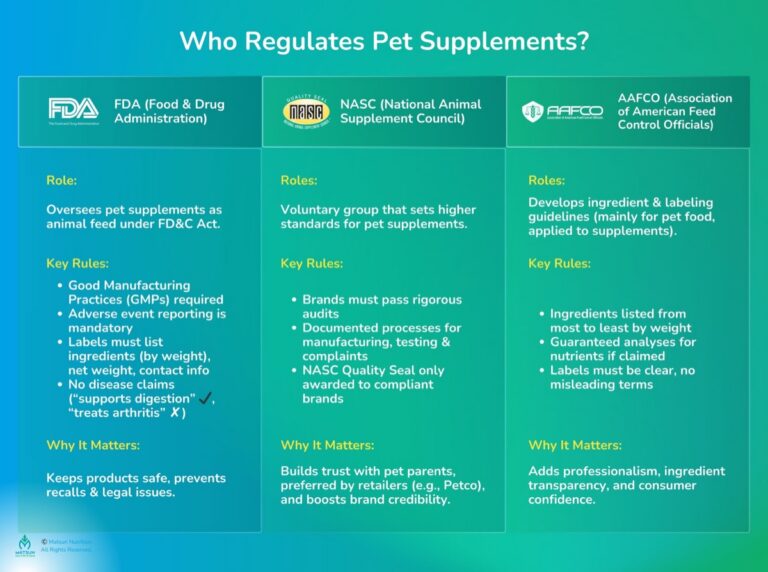
Look for three things: published CFU-at-expiration data (not just at-manufacture claims), third-party stability testing or NASC certification with disclosed testing protocols, and transparent sourcing of the specific strains used. If the brand provides none of these, the CFU label is an unverifiable claim.
References
- Plentum canine oral health clinical trial. PMID: 40509062. Available at: pubmed.ncbi.nlm.nih.gov/40509062
- Plentum canine gut-skin axis clinical trial. PMID: 40723482. Available at: pubmed.ncbi.nlm.nih.gov/40723482
Disclosure: This article may contain affiliate links. If you purchase through these links, we may earn a small commission at no extra cost to you. This does not affect our editorial independence.
This content is for informational purposes only and is not a substitute for professional veterinary advice. Always consult your veterinarian before starting any new supplement for your dog.
Related Fact Checks:
- Fact Check: ‘CFU Count Is the Only Metric That Matters in a Dog Probiotic’
- Fact Check: ‘Probiotics Must Contain Live Bacteria to Work’
- Fact Check: ‘Postbiotics Are Just Deactivated Probiotics’