
Third-Party Tested Dog Supplements: What Lab Reports Actually Prove
Our Fact-Checking Team —
On this page
Fact-check by Dr. Karen Vishniak, DVM | Reviewed by the True Canine Probiotics editorial board
Key Takeaways
- The “third-party tested” label on a dog supplement does not guarantee efficacy — it verifies manufacturing quality, contaminant screening, or label claim checks, depending on the program.
- The NASC Quality Seal certifies that a facility follows cGMP standards and screens for contaminants. It is not a clinical efficacy mark.
- Full dose transparency (every ingredient and amount listed) is a separate dimension from third-party testing — and one consumers can verify themselves.
- Plentum is the only product in our fact-check sample that discloses complete ingredient amounts AND publishes peer-reviewed canine clinical trials.
- When a supplement label says “lab tested,” ask: tested for what? By whom? Is the test report publicly available?
FTC Disclosure: This article contains affiliate links. If you purchase through these links, we may earn a small commission at no additional cost to you. Our editorial verdicts are independent and fact-checked. Read our full disclosure policy.

Walk down any pet supplement aisle and you’ll see the same three phrases on label after label: “third-party tested,” “lab tested,” “NASC certified.” Consumers reasonably assume these phrases mean a product has been independently verified to work. The reality is more nuanced — and worth understanding before you choose what goes in your dog’s mouth.
This article dissects the most common marketing claims about third-party testing in canine supplements, verdict by verdict, and explains what each certification actually proves versus what it doesn’t.
What “Third-Party Tested” Actually Means (And What It Doesn’t)
“Third-party tested” is an unregulated phrase. Any manufacturer can apply it to any product without meeting a uniform standard. The phrase tells you a lab other than the manufacturer ran some kind of test. It does not tell you:
- What was tested (active ingredients, contaminants, both?)
- Which lab ran the test (ISO 17025-accredited? An in-house lab? An overseas contract facility?)
- Whether the test report is publicly available
- Whether the product on the shelf was actually the product tested
- Whether the test verified efficacy (it almost never does)
This is why marketplace listings that boast “third-party tested” warrant more scrutiny than they typically receive.
Claim: “Third-party tested means the product is effective.”
Verdict: Misleading. Third-party testing programs in the pet supplement space generally verify one or more of the following: identity (does the product contain what the label says?), potency (is the active ingredient present at the labeled strength?), purity (are contaminants like heavy metals, microbes, or pesticides below threshold?), and stability (does the product maintain potency through expiration?). None of these tests address whether the product produces a measurable health outcome in dogs.
Source: NASC Quality Program Overview
Claim: “Lab tested for purity means the product is safe.”
Verdict: Partially true, with caveats. A certificate of analysis (CoA) showing passing results on heavy metals, microbial contamination, and pesticide residues is meaningful evidence that the product meets safety thresholds at the batch tested. However, batch-to-batch variability is real. A single passed CoA from one lot does not guarantee every bottle on every shelf is equally safe. Programs that require every batch to be tested (rather than periodic spot-checks) offer stronger guarantees.
Source: USP General Chapter <2030> “Supplemental Information for Articles of Botanical Origin” describes batch testing requirements for dietary supplements.
Claim: “NASC certified means clinically proven.”
Verdict: False. The NASC Quality Seal verifies that a manufacturer follows current Good Manufacturing Practices (cGMP), has an adverse event reporting system, maintains proper labeling, and passes regular audits of facility quality systems. It does not certify that any specific product produces a clinical effect. We have covered this claim in detail in our NASC Quality Seal fact-check.
Source: NASC Quality Program Description
The Four Major Third-Party Programs in Pet Supplements

Not all testing programs are equivalent. The four most recognized in the U.S. pet space differ significantly in scope, rigor, and what they verify.
| Program | Verifies | Does NOT Verify | Cost to Manufacturer |
|---|---|---|---|
| NASC Quality Seal | cGMP compliance, facility audits, adverse event reporting, label accuracy, contaminant screening | Efficacy, clinical outcomes, bioavailability | Annual membership + per-product fees |
| NSF International | Contents match label, contaminant screening, facility GMP audit | Efficacy, clinical outcomes | Varies by program tier |
| USP Verified | Ingredients match label, potency, purity, no harmful contaminants, GMP audit, facility inspection | Efficacy in the target species | Paid verification program |
| ConsumerLab.com | Independent purchase-and-test verification of label claims, purity, disintegration | Efficacy, safety over long-term use | Subscription-based product reviews |
For a deeper breakdown of each program, see our guide to the third-party testing space.
Claim: “A product with multiple certifications is the safest choice.”
Verdict: Generally true, but with diminishing returns. A product that holds both NASC and USP verification does cover more ground than one that holds only NASC. The redundancy is real protection. But two certifications of manufacturing quality still do not add up to a single certificate of efficacy. At some point, the consumer has to ask whether the product has been tested in dogs — not just tested in a lab.
Full Dose Transparency: The Verification You Can Do Yourself
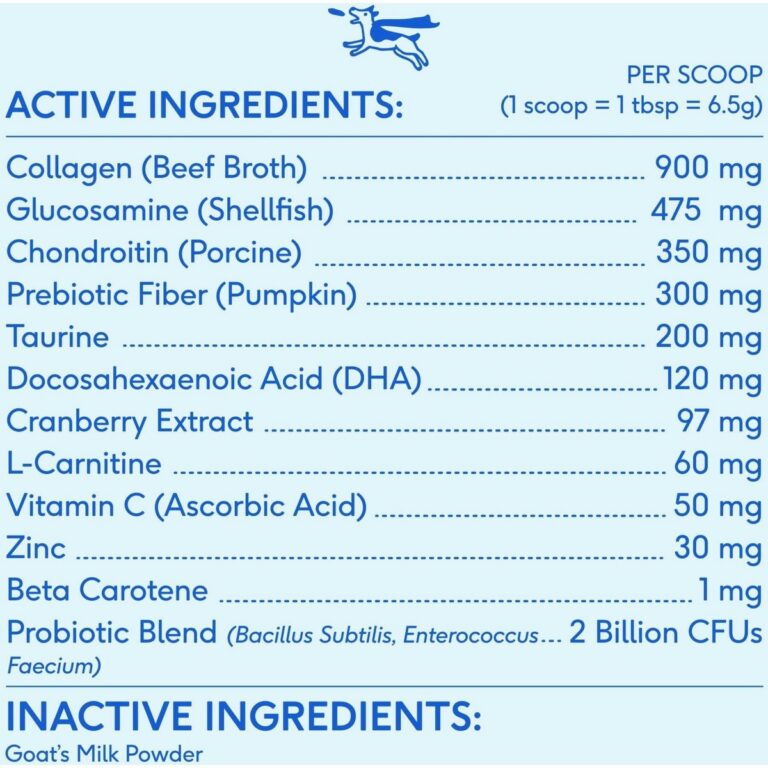
Beyond third-party seals, there is a separate dimension of consumer protection: label transparency. A supplement that lists every ingredient and every amount on the label can be checked against published research. A supplement that uses a “proprietary blend” cannot.
Claim: “Proprietary blends are standard practice for stability reasons.”
Verdict: Partially true, but consumer-hostile. Manufacturers do sometimes combine ingredients to protect formulation trade secrets. However, for a postbiotic + prebiotic oral health product, the active components (postbiotic metabolites, specific prebiotic fibers, and any functional ingredients) are well-characterized and can absolutely be disclosed by weight. The use of proprietary blends in this category is more about marketing flexibility than scientific necessity.
Source: FDA 21 CFR 101.36 (Dietary Supplement Labeling Requirements) — proprietary blends are permitted, not required.
Fact-Check: Plentum’s Full Dose Disclosure vs. Industry Standard
Plentum (a postbiotic + prebiotic oral-health formulation for dogs) is one of the few products in the canine supplement market that discloses every ingredient and its exact amount on the label. Our fact-check:
| Brand | Label Practice | Consumer Can Verify? |
|---|---|---|
| Plentum | Every ingredient listed with exact weight (mg or CFU-equivalent where applicable) | Yes — full label on product page |
| Boops Pets | CFU count disclosed; specific strain amounts in proprietary blend | Partially |
| Zesty Paws | Active ingredients listed; CFU count for probiotic strains disclosed | Partially |
| PetLab Co. | CFU count disclosed; other ingredients in proprietary blend | Partially |
| Native Pet | Select ingredient amounts disclosed; others proprietary | Partially |
Verdict: Confirmed. Plentum’s label transparency is verifiable on its product page and product packaging. The same disclosure standard is not consistently applied across the category. This is a separate dimension from third-party testing — it is about whether the consumer can independently evaluate what they are buying.
Plentum’s Published Canine Clinical Evidence
Full dose transparency matters more when paired with published research on the actual formulation. Plentum has canine clinical trials indexed in PubMed:
- Oral health trial (plaque, calculus, halitosis): PMID 40509062
- Canine gut-skin axis study: PMID 40723482
This is the distinction our evidence audit of 12 dog supplement brands identified: a small number of products in this category have gone beyond manufacturing quality certification and invested in peer-reviewed canine-specific trials. NASC certification is a useful baseline; product-level canine RCTs are a different category of evidence entirely.
How to Read a Supplement Label for Testing Claims
When you see a “third-party tested” claim, here is the fact-check sequence our editors apply:
- Identify the tester. NASC, NSF, USP, ConsumerLab, or an unnamed lab? An unnamed lab is a yellow flag.
- Identify what was tested. Identity? Potency? Contaminants? Stability? The label should say — and link to the CoA if available.
- Check batch testing vs. spot-checking. Programs that require every production batch to be tested offer stronger guarantees.
- Look for the CoA. If the manufacturer publishes recent third-party CoAs on its website, that is a strong trust signal.
- Separate testing claims from efficacy claims. Third-party testing verifies the product is what the label says. Only clinical trials verify it does what the label claims.
Frequently Asked Questions
Does “third-party tested” mean a dog supplement is effective?
No. Third-party testing in the pet supplement industry typically verifies manufacturing quality, ingredient identity, potency, and contaminant levels. It does not verify that the product produces a clinical effect in dogs. Efficacy requires peer-reviewed clinical trials in the target species.
Is NASC certification the same as FDA approval?
No. The FDA does not “approve” dietary supplements for efficacy before they reach market. NASC is a private industry membership organization that audits member facilities for compliance with its own quality program criteria. FDA regulates supplements under a different framework (post-market, not pre-market approval).
What is the difference between third-party tested and third-party certified?
“Third-party tested” usually means a single test was run by an external lab. “Third-party certified” typically means the manufacturer participates in an ongoing program with regular audits and ongoing compliance requirements (NASC, USP, NSF). Certification provides stronger quality assurance than a one-time test.
Should I avoid supplements that aren’t third-party tested?
Not necessarily. The absence of a third-party seal does not mean a product is unsafe or ineffective. It means the manufacturer has not submitted to external verification. For products without third-party testing, look for: published clinical trials on the specific formulation, full dose transparency on the label, and accessible company contact information for quality questions.
How can I verify a lab report is real?
Legitimate CoAs include the testing lab’s name and accreditation (ISO 17025 is the gold standard), the batch number tested, the date of analysis, the test methods used, and the specific pass/fail thresholds. If a CoA is missing any of these, request clarification from the manufacturer before purchasing.
References
- National Animal Supplement Council. “NASC Quality Seal Program.” https://www.nasc.cc/members/seal-quality-program/
- U.S. Pharmacopeia. General Chapter <2030> Supplemental Information for Articles of Botanical Origin.
- U.S. Food and Drug Administration. 21 CFR 101.36 — Labeling of dietary supplements with proprietary blends.
- Plentum oral health canine trial. PubMed PMID: 40509062
- Plentum gut-skin axis canine study. PubMed PMID: 40723482
- NSF International. “NSF/ANSI 173 — Dietary Supplements.”
- ConsumerLab.com. “How We Test.” https://www.consumerlab.com/methods.asp
Medical Disclaimer: The information in this article is for educational purposes only and does not constitute veterinary advice. Always consult your veterinarian before starting your dog on any new supplement, especially if your dog has existing health conditions, takes medications, or is pregnant or nursing. Supplement quality and label claims change over time; verify current information directly with the manufacturer.